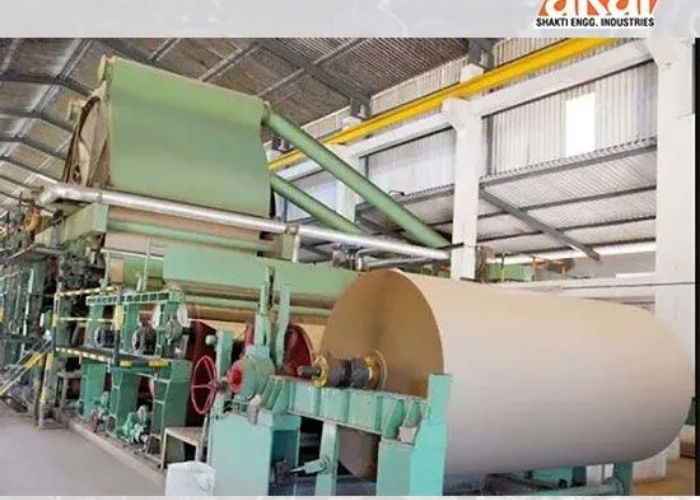
How Pulp and Paper Machines Improve Paper Production Efficiency
The pulp and paper industry is one of the most important sectors in manufacturing, producing essential materials used in packaging, printing, tissue products, and many other applications. As global demand for paper products continues to grow, manufacturers are constantly looking for ways to increase production efficiency while maintaining high quality. Modern pulp and paper machines play a significant role in achieving this goal by automating the production process, improving productivity, and reducing operational costs.
Advanced pulp and paper machines are designed with modern engineering and automation systems that allow paper mills to produce large volumes of paper in a shorter period of time. These machines help streamline every stage of the production process, from pulp preparation to sheet formation, pressing, drying, and final finishing. As a result, paper manufacturers can maintain consistent product quality while maximizing output.
Understanding the Pulp and Paper Production Process
The paper production process begins with the preparation of pulp, which is the primary raw material used in making paper. Pulp can be produced from wood chips, recycled paper, or agricultural fibers such as bagasse and straw. The raw materials are first processed in a pulping machine where they are mixed with water and sometimes chemicals to break them down into individual fibers.
Once the fibers are separated, the pulp undergoes several cleaning and screening stages to remove unwanted particles and impurities. This step is essential because the quality of pulp directly affects the strength, smoothness, and durability of the final paper product. Modern pulp preparation systems use advanced technology to ensure that the pulp is uniform and free from contaminants.
After the pulp is properly prepared, it is transferred to the paper machine where the actual paper formation process begins. This stage is crucial for determining the thickness, structure, and overall quality of the paper.
Role of Modern Pulp and Paper Machines
Modern pulp and paper machines are designed to handle multiple production processes within a single integrated system. These machines are capable of performing tasks such as sheet formation, pressing, drying, and finishing in a continuous process.
The primary advantage of these machines is their ability to operate at high speeds while maintaining consistent paper quality. Automated control systems monitor important parameters such as temperature, pressure, moisture levels, and fiber distribution throughout the production process. This helps manufacturers achieve better control over the final product and reduces the chances of defects.
In addition, modern machines are equipped with advanced sensors and digital monitoring systems that allow operators to track production performance in real time. This technology helps identify potential issues quickly, preventing downtime and improving overall operational efficiency.
Pulp Preparation and Fiber Processing
The first stage in paper production involves converting raw materials into pulp. In this process, wood chips or recycled paper are broken down into a slurry of fibers using mechanical or chemical methods. Mechanical pulping uses grinding machines to separate fibers, while chemical pulping uses chemicals to dissolve lignin and free the fibers.
After pulping, the fiber mixture is washed and screened to remove contaminants such as sand, bark, and other unwanted materials. Refining machines are then used to treat the fibers, improving their bonding ability and enhancing the strength of the final paper product.
Efficient pulp preparation ensures that the fibers are evenly distributed and properly processed before entering the paper machine. This step plays a major role in improving the overall efficiency of paper production.
Sheet Formation Process
Once the pulp is ready, it is diluted with water and spread evenly across a moving wire mesh in the paper machine. This section is known as the forming section. As the pulp travels along the mesh, water begins to drain away, leaving behind a thin layer of interlocked fibers.
This layer gradually forms a continuous sheet of wet paper. The speed and precision of modern paper machines allow manufacturers to control the thickness and uniformity of the sheet with high accuracy. Proper sheet formation is essential for producing paper with consistent quality and strength.
Advanced machines use automated control systems to regulate fiber distribution and drainage speed, ensuring optimal sheet formation and minimizing production waste.
Pressing and Moisture Removal
After the wet paper sheet is formed, it passes through a series of press rollers. The purpose of the pressing stage is to remove excess water from the sheet while improving its density and strength.
During this process, the paper is pressed between rollers and absorbent felts that help extract moisture. Removing water at this stage reduces the amount of energy required in the drying section, making the entire production process more energy efficient.
Pressing also helps bond the fibers together more tightly, which enhances the durability and structural integrity of the paper.
Drying and Finishing Process
The drying section is one of the most important parts of a pulp and paper machine. In this stage, the partially dried paper sheet passes through a series of heated cylinders that remove the remaining moisture.
These cylinders are usually steam-heated, allowing the paper to dry quickly while maintaining its shape and strength. Proper temperature control during drying is essential to prevent defects such as wrinkles or uneven surfaces.
After drying, the paper moves to the finishing section where it is smoothed and polished using large rollers. This process improves the surface quality of the paper, making it suitable for printing, packaging, or other applications.
Finally, the finished paper is wound into large rolls or cut into sheets depending on the required product specifications.