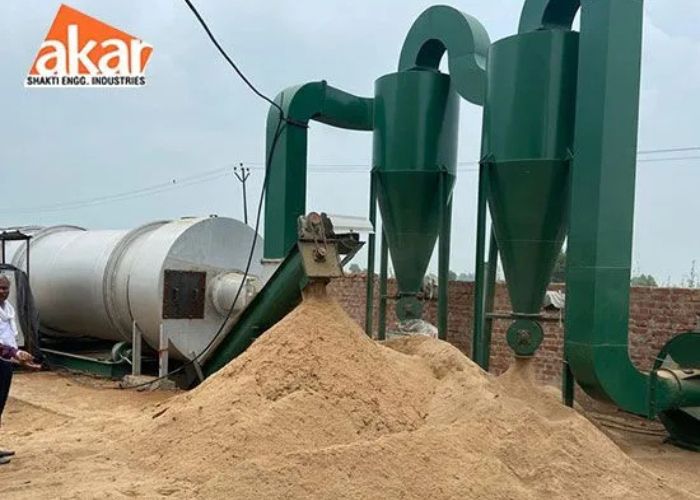
Role of Rotary Dryers and Storage Silos in Industrial Processing
Industrial processing involves multiple stages where raw materials are transformed into finished or semi-finished products. Two important components that play a crucial role in many industries are rotary dryers and storage silos. These systems help in drying, storing, and handling bulk materials efficiently, ensuring smooth production and better product quality.
Rotary dryers are used to remove moisture from raw materials, while storage silos are designed to safely store large quantities of processed or unprocessed materials. Together, these systems improve productivity, reduce operational costs, and maintain a continuous flow of materials in industrial operations. Industries such as cement, agriculture, chemical processing, mining, and paper manufacturing rely heavily on rotary dryers and storage silos to maintain efficient production processes.
Understanding Rotary Dryers
A rotary dryer is an industrial machine used to remove moisture from bulk materials. It consists of a large rotating cylindrical drum that is slightly inclined. Raw materials enter from one end of the drum and move gradually toward the other end as the drum rotates.
During the drying process, hot air or gas is passed through the rotating drum. The heat removes moisture from the material while the rotating motion ensures that the material is evenly exposed to the heat. This process results in uniform drying and improved product quality.
Rotary dryers are widely used in industries where materials must be dried before further processing or storage. They are particularly effective for handling large volumes of materials and maintaining consistent drying results.
Working Principle of Rotary Dryers
The working principle of a rotary dryer is based on heat transfer and material movement. As the drum rotates, internal lifting flights pick up the material and drop it through the hot air stream. This increases the contact between the material and the heat source, allowing moisture to evaporate quickly.
The rotation of the drum ensures that the material is continuously mixed and evenly heated. This prevents overheating or uneven drying, which can affect product quality.
Modern rotary dryers are designed with advanced temperature control systems and airflow regulation mechanisms. These features help optimize drying efficiency while minimizing energy consumption.
Importance of Rotary Dryers in Industrial Processing
Rotary dryers offer several advantages that make them essential in industrial processing systems.
- Efficient Moisture Removal: One of the main functions of rotary dryers is to remove excess moisture from raw materials. Proper drying improves the stability and quality of the final product.
- High Processing Capacity: Rotary dryers are capable of handling large volumes of materials, making them ideal for industries that require continuous production.
- Improved Product Quality: Uniform drying ensures consistent product quality, which is especially important in industries such as food processing, chemicals, and paper manufacturing.
- Energy Efficiency: Modern rotary dryers are designed to optimize heat utilization and reduce energy consumption, helping industries lower their operating costs.
Understanding Storage Silos
Storage silos are large structures used to store bulk materials safely and efficiently. They are commonly used in industries such as agriculture, cement production, mining, food processing, and paper manufacturing.
Silos are typically made of steel or reinforced concrete and are designed to store materials such as grains, cement, wood chips, chemicals, and other bulk materials. They help maintain a steady supply of raw materials for production processes.
Storage silos also protect materials from environmental factors such as moisture, dust, and contamination. This ensures that the stored materials remain in good condition until they are needed for further processing.
Functions of Storage Silos in Industrial Operations
Storage silos play several important roles in industrial processing systems.
- Bulk Material Storage: Silos allow industries to store large quantities of raw or processed materials in a compact and organized manner.
- Continuous Production Flow: By maintaining a reserve of raw materials, silos ensure that production processes continue without interruption.
- Material Protection: Silos protect stored materials from environmental damage, reducing the risk of contamination or spoilage.
- Efficient Material Handling: Many silos are equipped with automated discharge systems that allow materials to flow directly into processing machines, reducing manual handling.